
Presentation
The Monastery of Pedralbes was founded by Queen Elisenda de Montcada in 1327 with the support of her husband, King James II. Following the spiritual currents of the time, the new monastery was occupied at its foundation by the Poor Clare Order, the female branch of the Order of St. Francis, which resided there virtually uninterrupted until 1983.
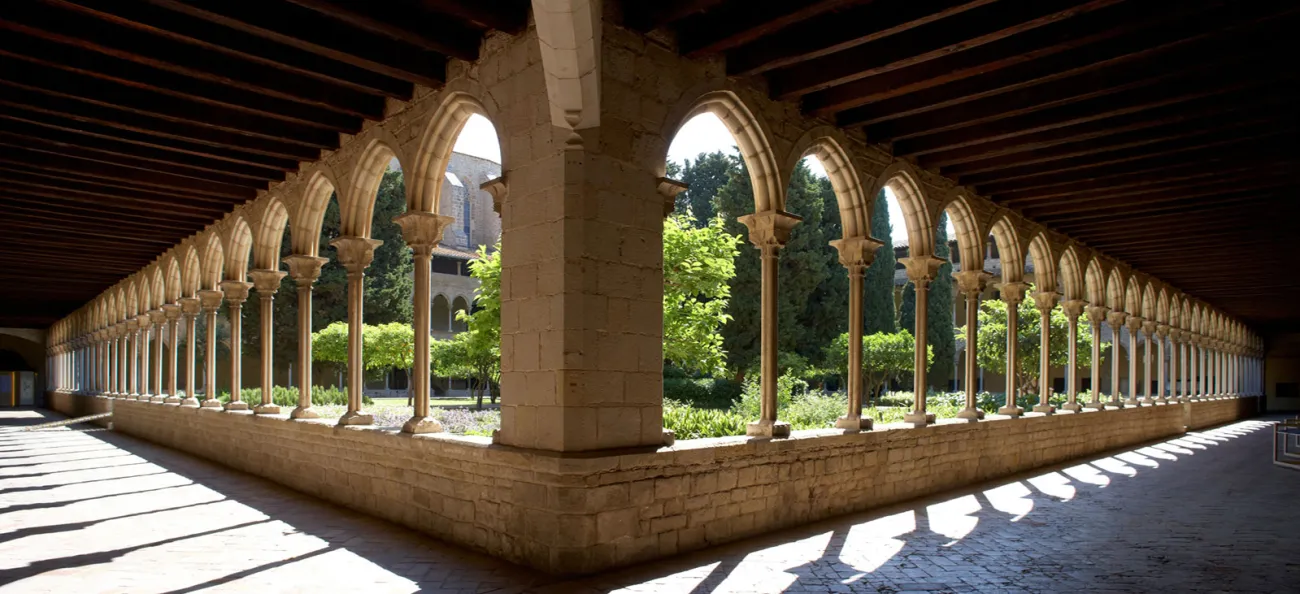
The building is one of the best examples of Catalan Gothic architecture, both for the church and for the three-storey cloister, one of the largest and most harmonious in this style. As regards the church, special mention should be made of the sepulchre of Queen Elisenda, which has two sides, one facing into the church, where she is dressed in royal attire, and the other giving onto the cloister, where she is shown as a penitent widow. Other highlights are the 14th-century stained glass windows, several sepulchres of members of the nobility and the three choirs: the loft, lower choir and monks’ choir.
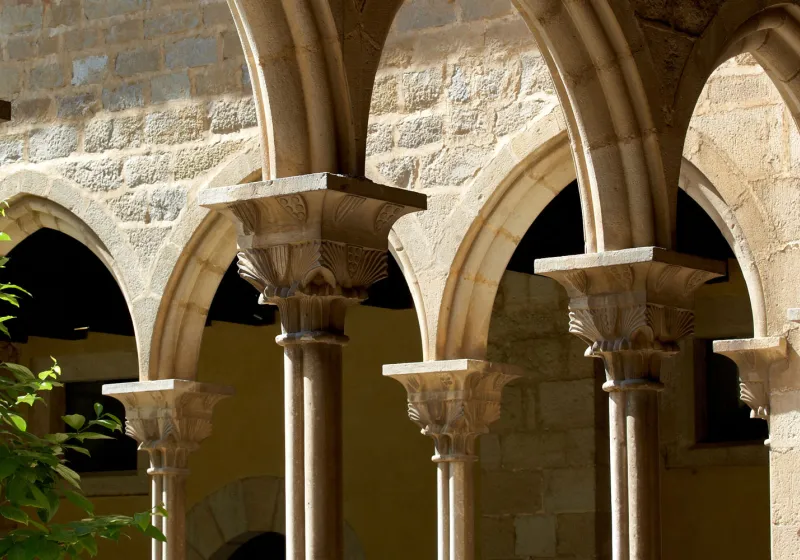
Inside the monastery, around the cloister, there is a series of day cells where the nuns withdrew for personal reflection. St Michael’s Chapel is another remarkable building, with murals that the painter Ferrer Bassa was commissioned to paint by the abbess, Sister Francesca ça Portella, in 1343. His work clearly reflects the influence of such important artists as Giotto, the Lorenzetti brothers and Simone Martini. Visitors will also be able to see the chapter house, the abbey room, the refectory, the kitchen, the storeroom, the dormitory, the infirmary – one of the best preserved Renaissance hospital buildings – the cloister of cats and the medieval vegetal garden.
In the dormitory, the nuns’ former sleeping quarters, which has undergone numerous transformations over time, visitors can see the exhibition “The Monastery Treasures”. This presents a selection of the best works of art, furniture and liturgical objects amassed by the community over seven centuries. The other permanent exhibitions at the monastery are: “Plants, Remedies and Apothecaries” in the cloister; an exhibition of dioramas in the storeroom; the exhibition "Monastery storage furniture. The greatness of simplicity”, and the exhibition “Touching the soul. The murals of St. Michael's chapel” and the vegetal garden.
In addition to its architectural significance, the Monastery of Pedralbes portrays the monastic life throughout history through the numerous objects and works of art it houses. This contributes to an understanding of the cloistered community that resided there until 1983, when the monastery was converted into a museum.